





Contact
Tell uswhat brings you here
A few sentences are enough. Or answer a few questions about your company and situation: you'll see an initial diagnosis, and our conversation can start with specifics.
Thanks. We've got your message
We'll get back to you as soon as we can and let you know whether and how we can help. Urgent? Call us: +48 726 220 596
fluostudio sp. z o.o.B. Chrobrego 28/3, 31-428 Kraków, PolandTax ID (NIP) 8681976395
What's next
After you send it
-
We read and reply
Every message is read by one of us. If we can't help, we'll say so plainly.
-
We talk
Most of the time goes into the conversation: about your company, your customers and what's slowing work down today.
-
We propose a scope
After the call you get a proposal: what we'll do, in what order and what it costs.
Need a non-disclosure agreement? We usually sign it before the first workshop.
Questions
Questions and answers
The questions we hear most often, across all our services. Pick a service or type what you're looking for.
Working together
When can you start?
We usually plan projects about four weeks ahead. It's still worth getting in touch straight away, though, because we sometimes start sooner, and for urgent projects we look for a way to fit your deadlines.
Do you only work with large companies?
We work with small ones too. Our clients range from companies just starting out to groups with several brands in several markets. We match the scope and pace of the work to the size of the company.
Will we get the source files?
Yes, as standard. You get a well-organised package: source files, previews and finished materials for print and online. We prepare templates in the software your team uses.
Can you work with our marketing team?
Yes, we often work as the marketing team's external design team. Grupa Dawtona's designers make posts with our Figma templates, and the Urtica team puts together presentations and posts from ready-made layouts.
Can you work with our suppliers?
Yes. If you have a printer or IT team you trust, we bring them into the schedule.
Who is responsible if something goes wrong at a supplier's end?
We are. We coordinate corrections and complaints, and the scope of our responsibility for suppliers is set out in the contract.
Do you have experience in our industry?
We've worked for medical, pharmaceutical, industrial and technology companies; see our industry pages.
Will you sign an NDA?
Yes, usually before the first workshop.
Branding
How long does it take to create a visual identity?
The standard process takes about 4–6 weeks. More complex projects, for example with a website or a very large number of materials, can take 2–3 months. We agree on the exact schedule at the start of the project.
What does a complete visual identity project include?
As standard: the logo in its variants, a brand book, the basic company materials (business cards, letterhead, email signature), and the brand colours and typography. The scope can be extended to packaging, marketing materials, a website or social media.
How long does it take to build a new brand?
The identity alone usually takes 4–6 weeks. With a name, website and launch materials, 2–3 months. We agree the schedule at the start.
More: New brandCan we start with just the logo?
Yes. In that case we'll begin with a short workshop: we'll agree who the logo needs to speak to, so it's clear how to judge it.
More: New brandDo we have to change our logo?
Not always. Sometimes the logo is fine and the problem is how the brand is used. Then we organise the system around the logo. We'll tell you straight after the audit.
More: Rebranding with rolloutIn what order should materials be replaced?
We set that out in the rollout plan: first what customers see, then the materials that get used up anyway.
More: Rebranding with rolloutWebsites
What do you build websites with?
We choose the technology to suit the team that will edit the site. Most often that's WordPress with our own theme and no ready-made templates, and WooCommerce for shops.
More: WebsitesCan we change the content ourselves after launch?
Yes, that's the whole point. The panel is built from blocks with fields, so changing content needs neither a developer nor a designer. After launch we train the team and leave a guide.
More: WebsitesWill we lose our Google rankings after the redesign?
To reduce that risk, we move the content over and set up redirects from old addresses. We plan the launch together with the people who handle your SEO, then check the Google reports afterwards and fix whatever needs fixing.
More: WebsitesWho prepares the content?
We can move and tidy up what you have, or write the missing texts. If you write the content yourselves, you get a sheet with fields for each page template, so it's clear what to write and where before anything goes on the site.
More: WebsitesWho takes care of hosting and the domain?
We can tidy up what you have with your current providers. If you'd rather have it all in one pair of hands, we'll buy a VPS or dedicated server on your behalf and manage it. Then we take responsibility for the providers.
More: WebsitesWhat happens after the site goes live?
For 12 months after launch we handle updates and backups kept off the server. After that we can keep looking after the site and developing it with you.
More: WebsitesHow long does a website take?
It depends on the size of the site and the number of templates and languages. We agree the schedule at the start, stick to it and keep you posted on where the work stands. Grupa Dawtona wrote to us about the PetCuisine website: “The whole project was delivered on the agreed schedule and budget, which we particularly appreciate.”
More: WebsitesWill you take over a website someone else built?
Yes. First we check the code, plugins, hosting and access, then tell you what can stay and what needs fixing. If the foundations are good, we develop the site in stages, building on what's already there.
More: WebsitesCan you move our site from WordPress to a static site?
Yes, if its content changes rarely. We move it to Astro, meaning ready HTML files with no PHP, plugins or database, while the design, content and addresses stay. If your team publishes something every week and wants to do it in a panel, it's better to stay with WordPress. More on the Moving from WordPress to Astro page.
More: WebsitesCan you also build a portal or a panel with logins?
Yes. We design and build partner portals, client panels and tools for teams as web apps.
More: WebsitesHow many pages will the website have?
As many as its audiences need. We settle the number on the sitemap before design starts, and build the menu around it. Thanks to templates, new pages need no design work: Intima Clinic has 243 service pages built from three templates.
More: Company websiteCan the website have several language versions?
Yes. A multilingual website has separate content for each language and can have separate editors. Porta PRO runs in Polish and Romanian, and Grupa BEST's six sites in five languages, one of them in Cyrillic.
More: Company websiteWho will move the content from the old site?
We will. We list the old site's content and addresses, move them to their new places and set up redirects. For best.com.pl that meant over 4,000 posts, reports and documents, and for urtica.pl 367 redirects.
More: Company websiteWill the website connect to our systems?
Yes, if the system allows it. Forms sign people up to mailing lists, job offers come from the recruitment system, and online booking leads to doctors' calendars. We start with a list of the systems you already use.
More: Company websiteWhat does working on a website look like?
Six stages: analysis and workshop, sitemap and wireframe, visual design, development and panel, content and testing, and finally launch and support. We agree the schedule at the start and keep you posted as we go. Each stage is described in our website design process.
More: Company websiteHow is a company website different from a landing page?
A company website answers the questions of many audiences and lives for years. A landing page has one goal and one button, usually for the length of a campaign. It can be built from the company website's blocks, like the campaign section on the Acer UK portal.
More: Company websiteWhich platform will you build the shop on?
We build shops on WooCommerce, which runs on WordPress, so the shop and the rest of the site share one panel. If you already sell on another platform, such as Shoper, we design the shop for it and your team builds it.
More: Online shopWill the shop connect to our warehouse and courier?
Yes. The Design Optyk shop is connected to the inventory software in its stores, to BaseLinker and to InPost. We start with a list of the systems you use and check what can be connected without retyping data.
More: Online shopWho will add the products?
At launch we can move products from the old shop and tidy them up, as we did for Biurokoncept. After that your team adds products in the panel, and for a large catalogue we can fill in descriptions and attributes with AI, checking every result.
More: Online shopWon't we lose customers from Google after changing the shop?
We move the content and redirect old product addresses to new ones to limit that risk. For Design Optyk we first set up redirects based on the sitemap, then fine-tuned them a week later using a Google report.
More: Online shopWhat if customers need to ask about a product first?
For made-to-order or individually priced products, the cart can turn into an enquiry that goes to a sales rep. That's how a website with a configurator works, for example at Biurokoncept.
More: Online shopCan you do the design only, without the build?
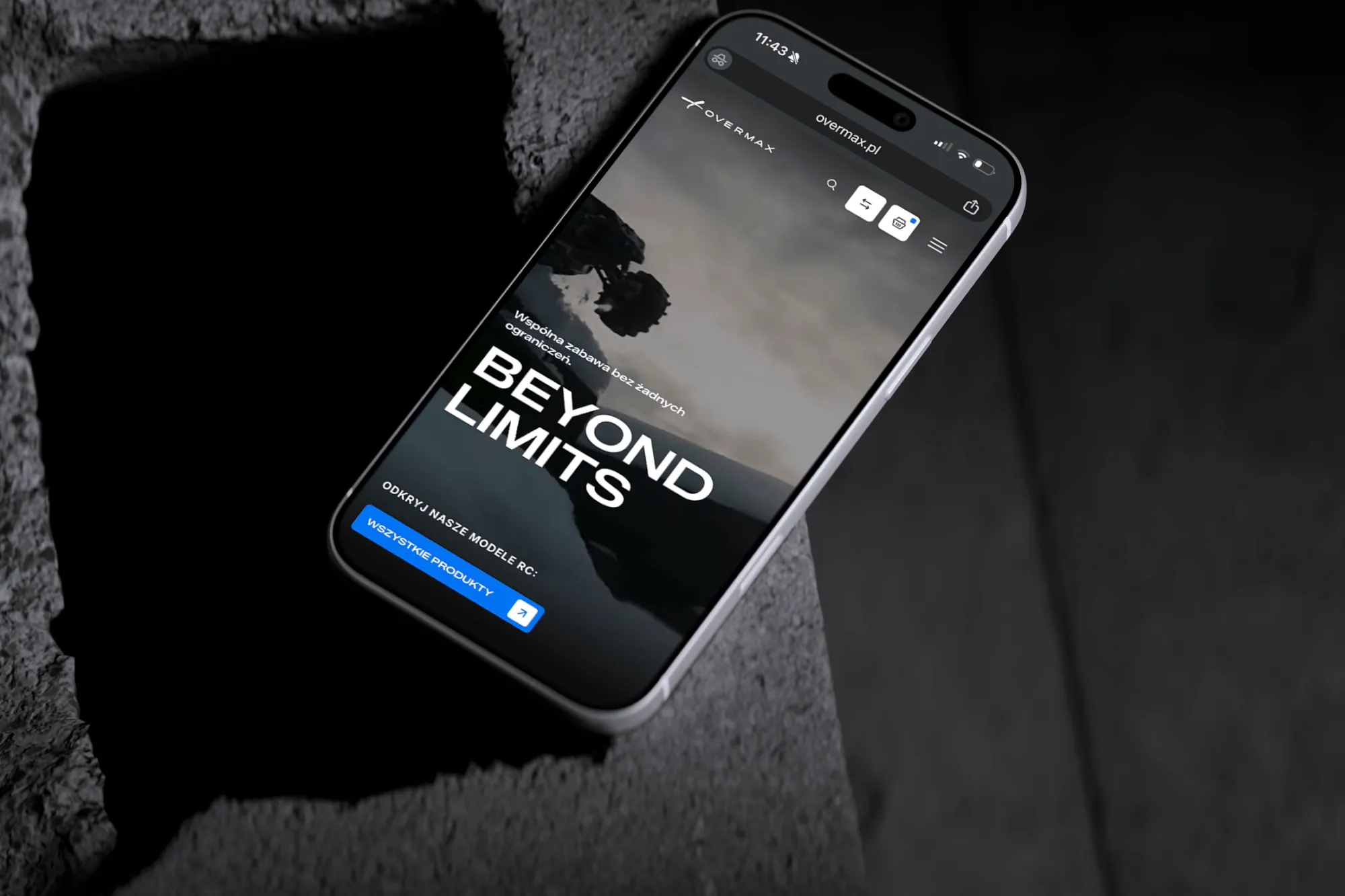
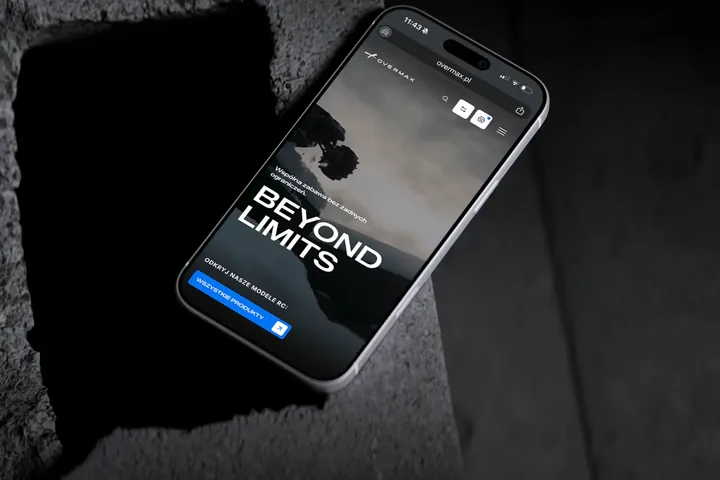
Yes. The Overmax shop design was built by the client's team, and Novicare24 by the client's team on Shoper. They get the desktop and mobile design from us, plus files: icons, photos and graphics.
More: Online shopDoes the configurator have to be 3D?
No. Photos or renders of the variants are often enough, and a 3D model makes sense for products customers want to see from every side. For office furniture we connect the pCon configurator, which has models from manufacturers' data.
More: Website with a configuratorWill customers see the price of their version?
They can, if the price can be calculated from their choices. For made-to-order products, an enquiry with the ready configuration, answered by a sales rep, usually works better.
More: Website with a configuratorHow does the configurator know what can be combined?
From rules we write down with your production or sales team: which sizes are available, which options exclude each other and what comes as standard. Customers see only the options that fit their choice.
More: Website with a configuratorCan we add new products to the configurator ourselves?
Yes. The Biurokoncept team adds products in the panel and connects the configurator to them on its own, following a recorded guide.
More: Website with a configuratorDoes the configurator work on phones?
Yes, we design it for desktop and mobile from the start. On phones the options sit below the product, in the order they're chosen.
More: Website with a configuratorWhere does the enquiry with the configuration go?
Wherever someone will answer it: the sales team's inbox or the system you use. The enquiry carries all the customer's choices, so the sales rep doesn't need to ask about the basics. When customers can also buy straight away, we connect the configurator to an online shop.
More: Website with a configuratorHow long does a landing page take?
Usually much less time than a company website, since a landing page has one goal and a few sections. It's quickest when built from the blocks of a site that's already live. We set the deadline at the start, to match the campaign launch.
More: Landing pageA separate address or a page on our domain?
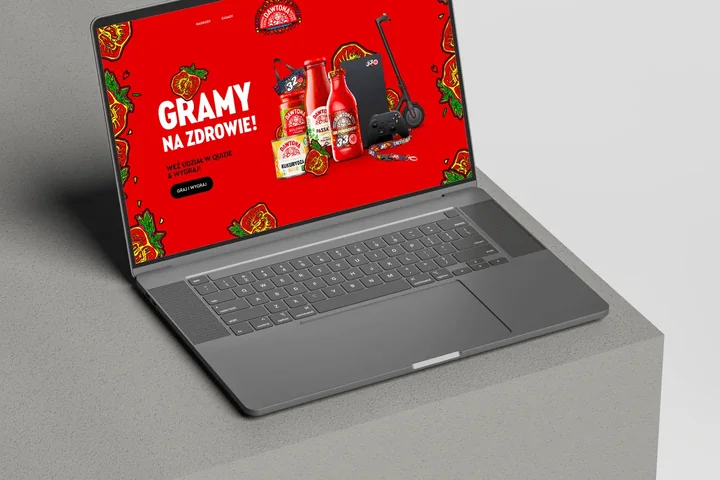
It depends on the campaign. A campaign with its own name, like the Moc Pomidora quiz, gets its own address. A product campaign can live on your website: on the Acer UK portal we added a campaign section with three landing pages.
More: Landing pageCan you make several versions of one page?
Yes. The Acer Predator promotion landing page has versions for x-kom, RTV Euro AGD and Media Expert, and Vero kept coming back to us from more countries. All versions are built from the same layout.
More: Landing pageWho will prepare the copy and graphics?
We can do it all, from headlines to graphics and animations, or work from campaign materials you already have. For Acer Predator, alongside the landing page we designed banners for the top of the retailers' websites and social media graphics.
More: Landing pageWhere do form submissions go?
Wherever someone will answer them: an inbox, the sales system or a mailing list. On the Vee Care landing page, Vee calls the visitor within 10 seconds of them leaving their number.
More: Landing pageHow is a landing page different from a company website?
A company website answers the questions of many audiences and lives for years. A landing page has one goal and one button, usually for the length of a campaign, launch or promotion.
More: Landing pageDo you also handle the technical side of websites?
Yes. We design, build and maintain websites. We can buy a server on your behalf and manage it, and we take responsibility for the suppliers we work with on the project.
Do you always build a website from scratch?
No. If the foundations are good, we suggest changes in stages.
More: New websiteWill we lose our Google rankings?
We move the content and set up redirects from the old addresses to limit that risk.
More: New websiteWhat technology do you build on?
We choose it to suit the team that will edit the site. Most often it's WordPress with our own theme, without off-the-shelf templates.
More: New websiteDo we have to move our hosting to you?
No. We can sort out what you have with your current providers. If you'd rather put it all in one pair of hands, we'll buy a VPS or dedicated server on your behalf and manage it.
More: Web infrastructureProduct design
What's the difference between UX design and UI design?
UX decides what's on the screen, in what order and what happens after a click. UI decides how it looks and behaves. The first starts with interviews and wireframes, the second ends with colours, typefaces and motion. There's more on the UI/UX design page.
More: UI/UX designCan you design just the UI for our wireframe?
Yes. We then start by going through the wireframe with you, to understand the decisions already made. If something in a flow worries us, we'll say so before we start drawing.
More: UI/UX designDo you also work on an existing shop or app?
Yes, and that's often where we start. We check what works and what gets in the way, and improve it in stages, so customers can keep using the product the whole time. We moved the Biurokoncept shop from its old platform together with its products, and every old product address now leads to the new one.
More: UI/UX designWhat software do you design in?
Figma. You get a file with views, components and styles that your team can keep working in. We export icons and graphics in formats ready for the build.
More: UI/UX designDo you write the code too?
Yes. We build WordPress and WooCommerce websites and shops ourselves, like the Porta Architect Zone and the Biurokoncept shop. We can also hand the design over to your developers, as with the Overmax shop, and answer their questions during the build.
More: UI/UX designWill the design meet WCAG?
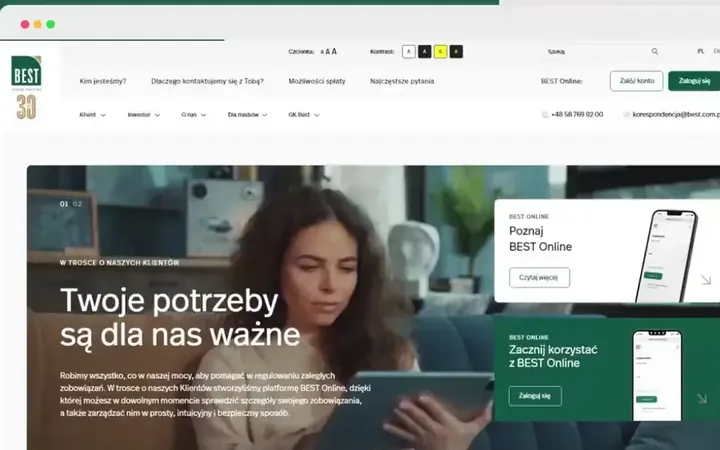
We check contrast, text size, keyboard order and screen reader descriptions in every project. When a website has to meet WCAG, we agree on the level at the start. That's how best.com.pl was made, built to WCAG 2.0.
More: UI/UX designWhat's it like working with you?
Before we start, you know how the work will be organised, in which stages and what you'll get at the end. Then we stick to the schedule and show what we've made after each stage. If something needs your decision, we say so right away and suggest what we'd choose ourselves.
More: UI/UX designWhat do we get at the end?
A Figma file with desktop and mobile views, a component library with states, a clickable prototype, a description of motion and element behaviour, and graphics for the build. If we build it ourselves, also a working website and training on the admin panel. Everything stays with you, so your team can take over part of the work, and we can come back together to extend it at any time.
More: UI/UX designHow is a web app different from a website?
A website is for reading; an app is for working: logging in, entering data, approving and coming back to what's left to do. A web app runs in the browser, so nobody has to install anything, and a new version reaches everyone at once. More in our glossary entry on web apps.
More: Web appsWhere do we start if the process runs in a spreadsheet today?
With that spreadsheet. It shows what data you collect, who fills it in and what people add in the margins because something is missing. Based on that we draw the first wireframe and show it to the team straight away.
More: Web appsWill the app connect to our systems?
Usually, yes. At the start we check what your systems make available and in what format. For Design Optyk the app reads stock levels from the warehouse software in the stores, and orders, prices and new products go to the shop via BaseLinker.
More: Web appsDo you build apps yourselves or only design them?
Both. For Vee we designed and built web apps, including the Vee Suite panel for confirming appointments at clinics. We designed the HomeKoncept site for the client's developers, with views for two screen widths and for phones.
More: Web appsHow many features should the first version have?
Enough for the process to run without the spreadsheet. The rest goes into a development plan and gets added once it's clear what people actually use. More on our MVP page.
More: Web appsWho will add content and users?
Your team, in the panel. We show how it's done and record guides. Biurokoncept got a recorded guide on adding a product and attaching a configurator to it without a developer, and we recorded four video guides for the BEST TFI panel. We can come back to developing the app together at any time.
More: Web appsHow do you keep data secure?
We design roles and permissions from the first wireframe: who sees which data, who can change it and what stays in the history. We agree the server, backups and login method with your IT department before we start coding.
More: Web appsWill the app work on a phone?
Yes, we design views for desktop and mobile. On a phone, whatever people do in the field or on the go comes first, such as checking a status or approving a request.
More: Web appsHow many people does a test need?
For a single audience, five or six people are usually enough, because most recurring problems show up after just a few sessions. When a product has several distinct groups, such as customers and distributors, we invite a few people from each.
More: TestingWhere will you find participants?
Ideally from your own contacts: customers, partners, distributors. We help write the invitation and agree on a small thank-you for taking part. When the product is new, we look for people from the same group outside your company.
More: TestingCan you test before the product exists?
Yes, and that's the cheapest moment. We test clickable wireframes and prototypes before anyone writes any code. There's more under wireframing and MVP.
More: TestingIn-person or remote testing?
Both. Remote makes it easier to bring together people from all over the country, while in person you see better what happens on a phone or at a workstation. Your team can watch every session, and you get the recordings together with the report.
More: TestingHow is a test different from a survey?
A survey collects what people say they do, and a test shows what they actually do. Both are useful: a survey before the project tells you what people are looking for, and a test on a wireframe tells you whether they find it.
More: TestingWhat about A/B tests?
An A/B test settles which of two versions works better with real traffic, but it needs a lot of visits and time. With less traffic, we compare versions in tests with people, using real content.
More: TestingWill participants see our unfinished product?
Yes, but on your terms. Before the session, participants agree to be recorded and commit to confidentiality, and we only show the prototype during the test.
More: TestingGraphic design
Do you take on single pieces, or only large projects?
Both. We often start with one leaflet or presentation and add a system and templates as the number of materials grows.
More: Graphic designDo you work with our existing identity, or do we have to start with branding?
We work with yours, even if someone else designed it. Where rules are missing or have drifted apart, we tidy them up first; more on that on the branding page.
More: Graphic designWhich programs will the templates be in?
Whichever your team uses: PowerPoint, Google Slides, Canva, Figma, Word or InDesign. Each comes with a short guide on what can be changed.
More: Graphic designDo you handle printing too?
Yes. We prepare files for the specific printer, help choose paper and finishes, check the proof, and can handle contact with the printer and take responsibility for the print run.
More: Graphic designHow quickly will we get the materials?
It depends on the material. Your team can put together a post from a ready template in a few minutes, while Dawtona's whole social media campaign, animations included, took 24 days. A large catalogue is a project of several weeks, because it waits for content, photos and the printer. Deadlines are agreed at the start.
More: Graphic designHow will we know what stage the project is at?
From day one you have a schedule: what will be ready at each stage, when, and what we need from you. After each stage we show the result and explain the decisions behind it, and we keep you updated as we go, including when something is waiting on content or the printer.
More: Graphic designCan you take over ongoing design support?
Yes. Posts, banners, presentations or reports are then handled by the same team that knows your brand, so there's no need to explain it again with every job. More on ongoing design support.
More: Graphic designDo you use AI?
Yes, for tedious, repetitive work: descriptions, metadata, variants and organising files. A person checks every result, and the design is always done by a designer.
More: Graphic designHow much does graphic design cost?
We price each project separately, after a short conversation about scope: how many materials, in how many formats and languages, with or without printing. You get the quote before any work starts.
More: Graphic designWhich software will we get the presentation in?
Whichever your team works in: PowerPoint, Google Slides, Canva or Figma. For sending, and just in case, we add a PDF that looks the same on every computer.
More: PresentationsCan we add more slides ourselves later?
Yes, that's what the template is for. Colours, typefaces and layouts are saved in the slide masters, so a new slide looks like the rest straight away. There's a short guide too and, if you like, a session where we show your team how to use it.
More: PresentationsWill you write the slide content as well?
Yes. We can start from an outline, an old presentation or a conversation with the presenter. We sort out the storyline, shorten the texts and suggest what to show as an image and what to say out loud.
More: PresentationsCan charts take their data straight from Excel?
Yes. In PowerPoint we link charts and tables to an Excel spreadsheet, and in Google Slides to Google Sheets. When finance changes the numbers, the slide pulls in the new data, while colours, typefaces and layout stay the same. We add a short note to the file on which cell goes to which slide.
More: PresentationsHow long does a presentation project take?
A short presentation in an existing template takes a few days. A new company presentation with a template takes longer, depending on the number of slides, how ready the content is and the rounds of revisions. When the presentation has a deadline, we plan the schedule backwards from it.
More: PresentationsWill you do animations and transitions?
Yes, in the file itself: a chart that grows, a diagram that builds step by step, smooth transitions between slides. When a video is needed, we make an animation or an explainer video.
More: PresentationsDo you design for LED screens and unusual formats?
Yes. We design to the screen's proportions, from standard 16:9 to panoramas across several walls. For Porta's anniversary in Romania we prepared a template for the speakers and a show on three LED walls.
More: PresentationsCan you prepare versions in several languages?
Yes. We design the layout with room for longer translations, and put the language versions in one file or in separate ones. For Grupa Dawtona, among others, we prepared a 45-slide presentation in Polish and English.
More: PresentationsHow much does a presentation design cost?
Every presentation is priced individually. The price depends on the number of slides, whether the content is ready, animations and language versions, and whether a template is needed. You get a quote after a short call and a look at the materials.
More: PresentationsWhat format will we get the e-book in?
Usually a PDF for screen, with a clickable table of contents, links and light images, so the file can be sent by email. When the e-book is mostly text to read on a phone, we add an EPUB, and when it needs to go on paper, a print PDF.
More: EbooksCan you write the content too?
Yes. We can start from notes, blog articles, a webinar recording or a conversation with your expert. We put together the chapter plan, write and edit, and your expert checks the technical details.
More: EbooksHow long does an e-book project take?
We prepare a short checklist in a few days. An illustrated guide of several dozen pages takes longer, depending on how ready the text is and how many rounds of corrections it needs. When the launch has a date, we plan the schedule backwards from it.
More: EbooksCan you help us collect contacts through the e-book?
Yes. We design a download page with a form and promotional graphics, and the e-book can go out by email right after sign-up. There's more about pages like this under landing pages.
More: EbooksCan you draw illustrations and infographics?
Yes, it's our favourite part. We draw processes as diagrams, data as infographics and difficult concepts as illustrations in the brand's style. When needed, we add photos or 3D visualisations.
More: EbooksCan the e-book be updated later?
Yes. We design it so that a new figure or an extra chapter doesn't throw the rest of the pages out of place. We'll prepare the next edition from the same file and, if you like, hand over a template in Canva or Figma so your team can fix small things themselves.
More: EbooksCan you prepare language versions?
Yes. We design the layout with room for longer translations, and lay out each version separately, with the hyphenation and quotation marks proper to that language.
More: EbooksHow much does an e-book cost?
We quote every e-book individually. The price depends on the number of pages, whether the text is ready, how many illustrations and infographics it needs, the formats and whether a download page is needed. You get a quote after a short call and a look at your materials.
More: EbooksOur text is in Word and our tables are in Excel. Is that enough?
Yes, that's how most reports start. We typeset the text from Word, and the tables and charts from the spreadsheets. We only ask for versions that have already been through the finance team, to keep corrections to a minimum.
More: Company reportsHow long does a report take?
A new report in an existing template usually takes us a few days to typeset, depending on its length and the number of correction rounds. The first report with a new template takes longer, which is why we plan the schedule backwards from the publication date.
More: Company reportsCan you design just the template, so we can typeset reports in-house?
Yes. We prepare the template in the software your team works in, with text, table and chart styles and a short guide, so every new edition looks like the first.
More: Company reportsThe report has to match our identity. What if we don't have one?
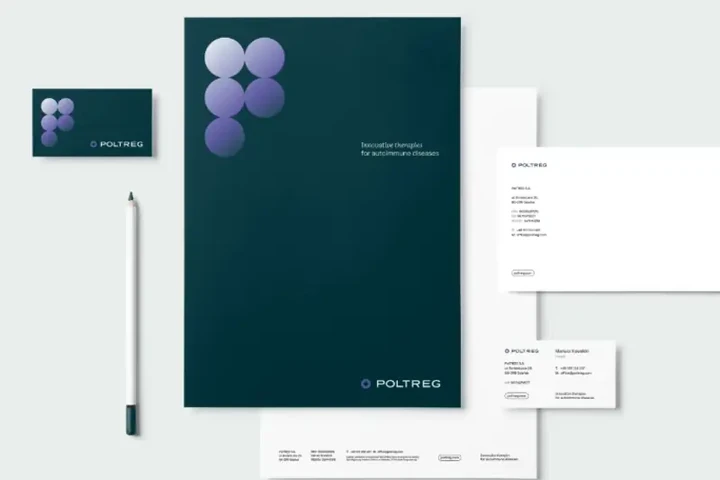
The template is built on the company's identity: its typefaces, colours and mark. When there's no identity, or it has aged, we start with branding, as we did for PolTREG: first the new brand, then reports in its template.
More: Company reportsDo you typeset English versions?
Yes. The English version is set in the same layout as the Polish one, so the pages, tables and charts of both versions match. The translation comes from you or your translator.
More: Company reportsDo you design ESG and sustainability reports?
Yes. An ESG report follows the same rules as an annual one: lots of data, several audiences and a deadline. We typeset it in the company template, so it sits next to the annual report like a sibling.
More: Company reportsDo you handle ESPI filing or printing?
The company files the report in ESPI, the Polish system for regulatory announcements, and we prepare the files: a PDF for publication, a lighter version for the website and print files. We can also order the printing and oversee it for you.
More: Company reportsHow much does a report design cost?
We quote each report separately. The price depends on the number of pages, tables and charts, the language versions and whether a template already exists. For new editions in the same template the scope is known, so the price is predictable too.
More: Company reportsWhere do we start if the product doesn't exist yet?
With the structure and the printer. If you don't have a packaging manufacturer yet, we'll help you find one and settle the format, material and print technology. While the product waits for its first batch, we make visuals so sales can start earlier.
More: PackagingDo you design the packaging structure too?
We usually get the die line from the printer or packaging manufacturer, because they know what their machines can do. When the shape needs changing, we suggest the changes and agree them with the manufacturer before the graphics are made.
More: PackagingWhat information has to go on the packaging?
It depends on the product and the market. Food, supplements, cosmetics and pet food each have their own requirements: ingredients, allergens, net weight, manufacturer details, batch number or dosage. The manufacturer is responsible for the content; we lay it out clearly and keep to minimum type sizes, such as an x-height of 1.2 mm on food labels in the European Union.
More: PackagingDo you handle printing?
Yes. We prepare files for a specific printer, help choose the paper and finishes, check the proof, and can order the print run and oversee it for you. We ordered the cartons and stickers for WellB ourselves.
More: PackagingCan you make visuals before the packaging is printed?
Yes. We make 3D renders and packshots from the print files, so the shop, catalogue and retail chain presentation can be ready before the first pallet arrives.
More: PackagingWill you design packaging for a private label or white label?
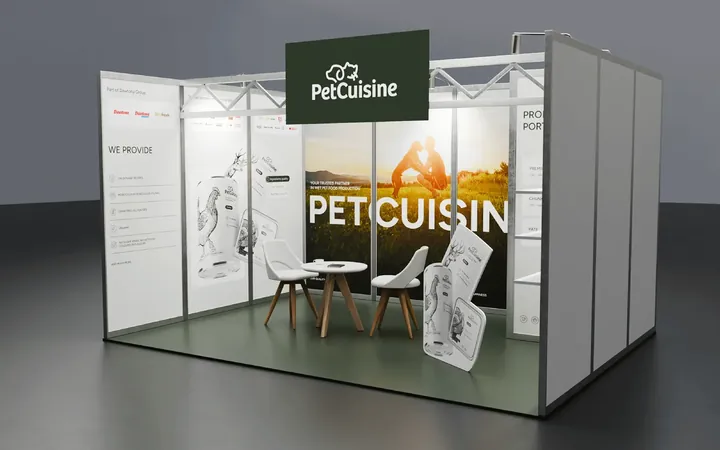
Yes. For PetCuisine, a pet food manufacturer working on a private and white label model, we designed sample packs in 12 flavours and unlabelled versions in which partners can see their future product.
More: PackagingHow long does packaging design take?
A single label on a ready die line takes a few days, a range of more than a dozen products a few weeks. Most of the time usually goes on content, approvals and printer deadlines, which is why we set the schedule at the start.
More: PackagingHow much does packaging design cost?
We quote each project separately. The price depends on the number of variants, pack types and language versions, and on whether we also handle printing and visuals. You get the quote before anything starts.
More: PackagingWhich software do you work in?
Whatever your team already knows: PowerPoint, Word, InDesign, Google Slides, Canva or Figma. If you're still choosing, we recommend Figma.
More: Tools for your teamWill the templates hold up with our content?
Before handing them over, we test them on your real offers and presentations.
More: Tools for your teamAnimation
Someone else designed our logo. Can you animate it?
Yes. We also animate marks we didn't design, and we stick to their guidelines. That's how we worked with the number 32 and the arc of a smile for Nowa Stomatologia: a dot drops and stretches into a line, and the line bends into a smile.
More: Motion designWe don't have product photos yet. Can you still make an animation?
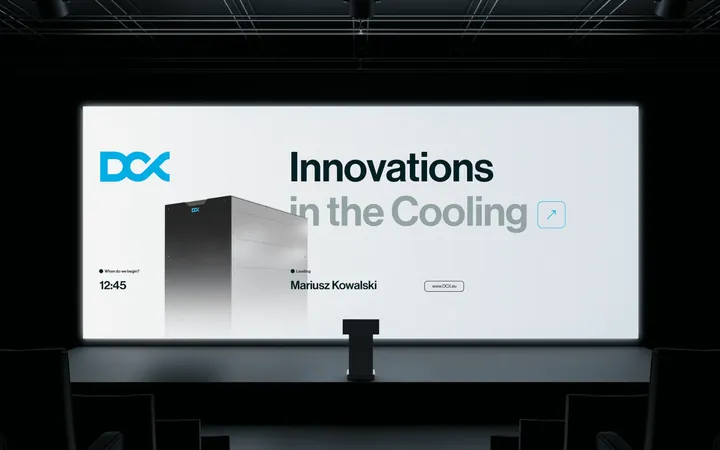
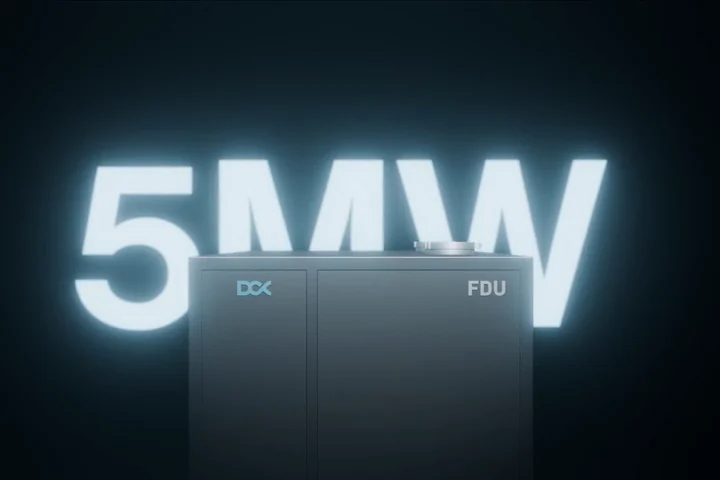
Yes, from the engineering files. We built the launch of the DCX units on engineering models before any photos existed. When a revised model came in mid-project, we re-rendered the scenes.
More: Motion designDo you only do 2D, or 3D animation too?
Both. In 3D we animated the launches of the DCX units and the Dawtona products: cans, jars and bottles, where we set the light, material and reflections by hand. In 2D we make logo and identity animations, like the one for the Pure Dent clinic, as well as posts and narrated films that explain a service, like the film about LNG stations for Gaz-Błonie.
More: Motion designWe already have footage and copy. Can you just do the editing?
Yes. We edit from what you have: footage, photos, files from a shoot and finished copy. If something's missing, we write the script, draw, model or find a voice-over artist. We agree on the scope together when preparing the quote.
More: Motion designWhat formats will we get the files in?
Whatever the channel needs: 16:9, 1:1, 4:5 and 9:16 for social media and ads, banners in ad network sizes, and for event screens, files at each screen's resolution, as at the anniversary of Porta in Romania.
More: Motion designCan you make language versions?
Yes. The invitation to the Porta gala was made in five languages, and so was the teaser film for the Porta catalogue. The animated Solar Systems instructions come in Polish, English, German, French and Italian.
More: Motion designCan you make animations for our website?
Yes. On the Dawtona website, each of the seven product categories has its own animation, and on pokket.pl every line of mousses has an animated background, separately for mobile and desktop. We design website motion together with the layout.
More: Motion designHow long does it take?
It depends on the length, technique and number of versions. A post lasting a few seconds is quicker to animate than a 3D launch with several shots. After the first call you get a quote and a schedule with dates for every stage and sign-off.
More: Motion designHow long should an explainer be?
As long as it takes to answer one question. Paxy's courier service fitted into 15 seconds, while the programme with six rewards for Acer needed almost three minutes. For ads we make shorter versions from the same material.
More: Explainer videoWill the video work without sound?
Yes, if it's planned that way from the start. Every scene has a short caption, and the most important things are visible in the picture. On social media and at trade fair stands, videos often play without sound.
More: Explainer videoDo you record guides for admin panels?
Yes. We recorded four video guides for the panel of the BEST TFI investor website, the Biurokoncept team got a recorded guide to adding products with the configurator, and the Porta team got a how-to video for working in the Porta PRO panel.
More: Explainer videoWe already have footage and a script. Can you just do the editing?
Yes. We edit from what you have: footage, screenshots, presentations and a finished voice-over script. We add captions, title cards and motion that follow your brand's rules. If something's missing, we write the script, draw the scenes and record the voice-over.
More: Explainer videoDo you make 3D videos?
Yes, when you need to show what happens inside a device or how it's assembled. We then animate a model built from CAD files, as in the videos for DCX. A service you can't touch is usually better told with 2D drawings.
More: Explainer videoAnimation or screen recording?
It depends on the subject. A website or app is best shown on real screens, as in the Porta PRO videos. A service you can't see is easier to draw, like Acer's rewards programme or Paxy's deliveries.
More: Explainer videoWhat do we need to prepare?
A conversation is enough to start: what the video should explain and to whom. Any materials you already have will help, such as a presentation, a service description, screenshots and brand files. We take care of the script, drawings, voice-over and music.
More: Explainer videoWe don't have an answer to that question yet. Write to us and we'll answer.
How we work
Why work with us
We work to a predictable process, with full transparency. You always know what we're doing, why and when, and you have our support at every stage.
-
Smooth process
The work is well organised: it runs in stages, to a schedule, and we report progress as we go.
-
Broad range
We can build 99% of what a website needs and 99% of the elements of an identity and visual communication: from an icon, illustration or label to animations, graphics, interactive catalogues and large websites with both simple and complex interactions.
-
Flexibility
We respond to change and think ahead to the next steps. We build systems you can come back to at any time, extend, or hand partly over to your own teams.